Key messages
Healthcare and social assistance work happens in a huge range of different work environments. Workers have the right to a safe work environment wherever they work. You must consult with workers and others in the workplace to provide a safe environment for workers, wherever they may work.
The best way to manage the risks of hazards in the work environment is through good work design, which allows you to eliminate work health and safety (WHS) risks from the work environment altogether. Where this is not possible, you must minimise risks as much as you reasonably can.
Jump to:
How you should identify and assess hazards and risks How you should control risks Case study: Smoking at an aged care home
Indoor and outdoor work environment hazards are physical features of the workplace that can harm a worker.
Some of the most common work environment hazards in the healthcare and social assistance industry include:
- poorly designed workplaces (e.g. not enough space for tasks or emergencies, no ability for staff to escape an area)
- poor lighting
- poor line of sight
- poorly designed floors and surfaces (e.g. carpet that is not suitable for pushing wheeled equipment, poorly designed stairs or ramps)
- clutter
- lack of access control for worker only areas, and
- remote or isolated workplaces.
In addition to the primary duty, you must eliminate or minimise WHS risks in the work environment as much as you reasonably can by ensuring:
- the layout of the workplace allows people to enter, exit and move around safely, under normal working conditions and in an emergency
- work areas have enough space for the work to be done safely
- there is adequate lighting for workers to work, move around and evacuate in an emergency safely
- floors and other surfaces are designed, installed and maintained so work can be done safely
- there is enough ventilation to avoid WHS risks
- workers who work in extreme temperatures avoid WHS risk.
First aid
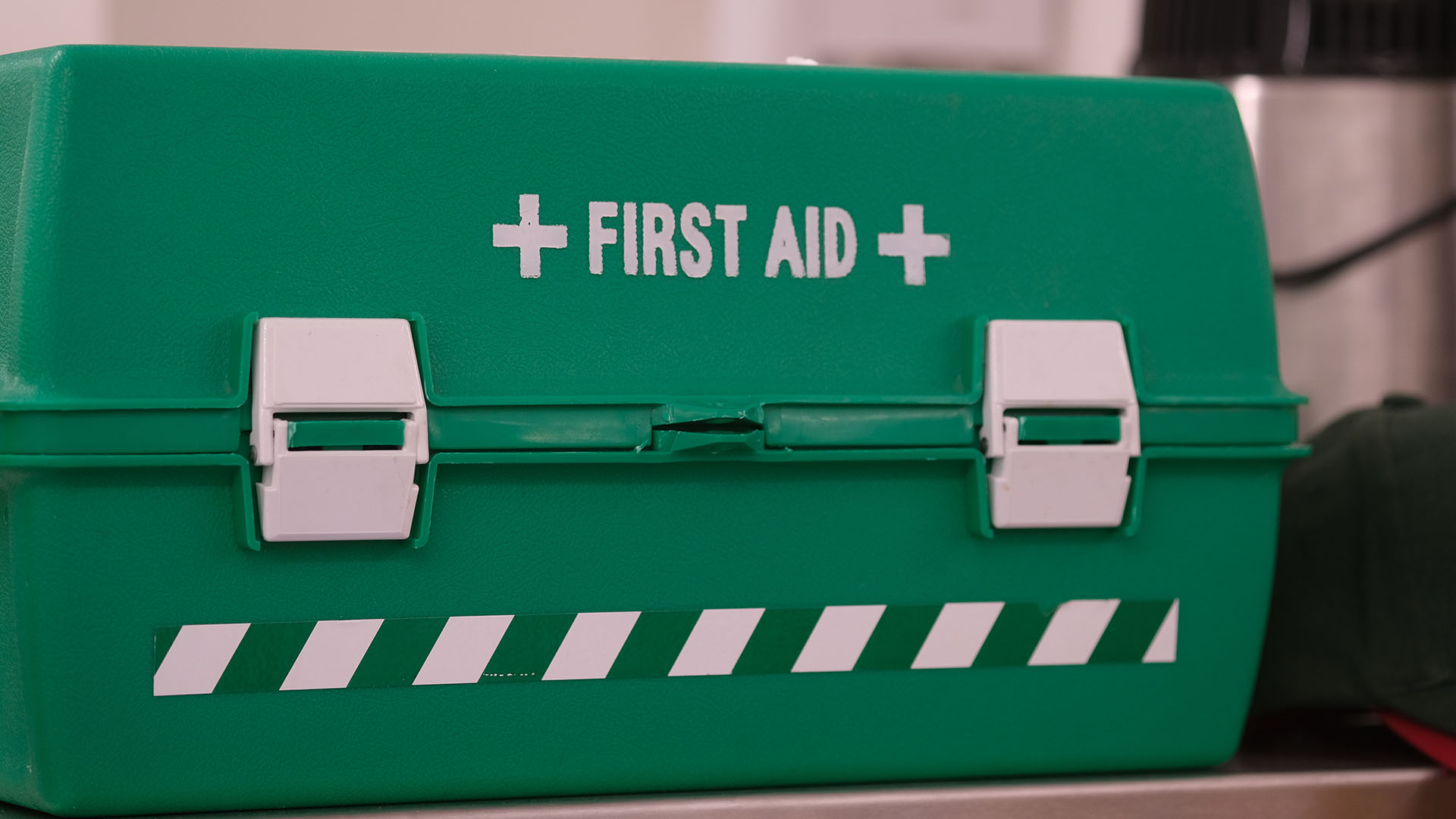
You must provide access to first aid equipment and facilities in the workplace. You must also ensure enough workers or other people are trained to administer first aid.
The type and extent of equipment and facilities provided, and the number of people trained, will depend on the risks in the workplace (e.g. type of work and hazards, number of people in the workplace, location of workplace).
For example, hospitals and aged care facilities will usually have many people trained in first aid. However, their facilities may not always be set up for the types of injuries workers experience.
For workers delivering care or support in peoples’ homes, first aid facilities may not be readily available. You must provide access to first aid for these workers based on a risk assessment (for example, a first aid kit).
Facilities
You must provide facilities for workers, including toilets, drinking water, washing and eating facilities. These facilities must be in good working order, clean, safe and accessible and should be separated from work areas. Information on what to consider when providing facilities for workers is provided in the section on adequate and accessible facilities.
Emergency plans
You must ensure that an emergency plan is prepared and maintained for the workplace. It must include procedures:
- that provide an effective response to emergencies
- for evacuating the workplace
- for notifying emergency service organisations as soon as possible
- for getting medical help
- for communicating with workers during an emergency
- for training workers in what to do in an emergency, and
- for testing the emergency response.
What is included in the emergency plan will depend on the risks in the workplace (e.g. type of work and hazards, number of people in the workplace, location of workplace). Emergency plans must be developed for all workplaces, even when workers are working from peoples’ homes.
Further guidance on emergency plans and procedures is available in the Code of Practice: Managing the work environment and facilities and the Emergency plans fact sheet.
Remote or isolated work
You must manage WHS risks for workers working in remote or isolated locations by eliminating or minimising WHS risks as much as you reasonably can. You must also provide a method for effective communication with the worker.
Remote or isolated locations could mean, for example, a worker who is alone on a ward late at night in a city hospital, or a worker driving to a remote rural property to deliver care.
More information on managing the risks of remote or isolated work is provided in the next section.
Quick links
Entries and exits Lighting Access to adequate and accessible facilities Ventilation Remote or isolated work Working in private homes
Entries and exits
Healthcare facilities such as hospitals and aged care homes are places with high foot traffic. Workers, patients, carers and visitors are constantly entering and exiting. This means the entry and exit must be safe and allow workers, patients and visitors (including those with special needs or disabilities) to enter and exit safely, both under normal conditions and in emergencies.
Design of aisles, walkways, staircases and ramps
Aisles, walkways and staircases should be wide enough to accommodate any tasks and equipment they will be used for (including in emergencies) and kept free of furniture or other obstructions. They should comply with all relevant Australian Standards, Building Codes, and Construction Codes. Open sides of staircases should be guarded with an upper rail and a lower rail. A handrail should be provided on at least one side of every staircase. Extra handrails may be needed down the centre of wide staircases. The surface of steps and the caps of stairs should be differentiated with contrasting colours. Ramps should have a slope that is gentle enough for anyone using it to navigate safely.
Separate entries and exits for equipment, vehicles and pedestrians, should be provided to minimise the risk of persons being hit by moving vehicles. If people and vehicles must share a traffic route, use kerbs, barriers or clear markings to designate a safe walkway. Doors and gates should be fitted with safety devices if necessary. Doors on main traffic routes should have a transparent viewing panel, unless they are fire-rated doors.
The location of exits should be clearly marked, and signs should be posted to show the direction of exit in an emergency evacuation. You should also consider installing observation mirrors (also known as ‘traffic mirrors’ or ‘convex mirrors’) to eliminate blind spots and prevent people at the workplace from running into each other. When work occurs in a person’s home or other new location, workers should familiarise themselves with exit points or emergency support.
Carpeting should be avoided in clinical areas where patient care occurs, or in areas where:
- spills are likely to occur (e.g. around sinks or dining areas)
- people may have direct contact with contaminated carpets (e.g. children or babies crawling on the floor)
- patients are at greater risk of airborne infections
- the carpet may make it difficult for workers to push patient beds, wheelchairs or other wheeled equipment like food and medication trolleys.
Floors and surfaces should also be routinely cleaned for infection control. For more information on infection control, see biological hazards.
Lighting
Lighting must be provided, whether it is from a natural or artificial source, to allow safe movement around the workplace and to allow workers to perform their job without having to adopt awkward postures or strain their eyes to see.
Entry and exit routes, stairs and walkways, wards, operating theatres, waiting areas and all areas of the workplace (including private homes) should be well lit.
Adequate lighting after dark may be required for outdoor paths around the workplace and in carparks. Outdoor lighting should allow workers to move about easily without the risk of falling.
Emergency lighting must be provided for the safe evacuation of people in the event of an emergency.
Lighting for work areas should be sufficient to prevent WHS risks. In most cases, this will mean ensuring the workplace is well-lit, including in areas such as carparks. In areas where lower levels of lighting are required (e.g. to reduce stimulus that may cause agitation, or where patients or clients are sleeping), lighting should still be adequate to protect against risks (e.g. trips or collisions).
For more information on lighting in the workplace, see Code of Practice: Managing the work environment and facilities.
Access to adequate and accessible facilities
Providing adequate and accessible facilities for workers is an important part of ensuring the workplace is free from WHS risks. In determining the kind of facilities to provide, you must consider:
- the nature of the work and hazards at the workplace
- the size, location and type of workplace, and
- the number and type of workers (e.g. gender, work roles) at the workplace.
Table 3 below further outlines key considerations when designing facilities.
Table 3: Key considerations for designing facilities
| Facility | Key considerations |
|---|---|
| General considerations for all work areas | Designed so they are free from WHS risks. Suitable for all tasks and equipment used in them. Suitable for use by all people who may use them (e.g. bariatric rooms will require a larger design, aged care bathrooms may need additional handrails, lifting equipment and space for additional staff) Ensure flooring is non-slip, level, clean and free of trip hazards. Suitable for emergencies (e.g. large enough to accommodate a crash cart and code blue or code black teams) |
| Free, clean drinking water | The temperature of drinking water should be at or below 24 degrees. Sometimes direct connection to a water supply is not possible. For example, workers on the road should have access to public drinking water or bottled water. |
| Eating facilities | Workers must be provided with clean facilities for eating, preparing and storing food. For residential care and supported accommodation, break rooms should be separate from the client’s living spaces. Eating facilities should be separate from work areas to avoid contamination, and to allow workers a break away from patients or clients. Where possible, work should be scheduled to allow workers travelling or working in remote areas access to suitable eating facilities. Where access to eating facilities for workers isn’t possible, the only enclosed facility available to them may be their vehicle. In this instance, portable food storage facilities may be required, such as a car fridge or insulated lunch box. |
| Handwashing | Hand hygiene facilities, like alcohol-based handrub dispensers or sinks with soap and water, should be provided in all examination and treatment areas, procedure rooms and near toilets (i.e. not in an adjacent room). They should also be in places where hygiene is important (e.g. kitchens, laundries, pharmacies, surgery rooms, laboratories, bathrooms and change rooms). Alcohol-based handrub should be provided in disposable cartridges with disposable nozzles, designed for hands-free dispensing. Refillable dispensers should not be used due to the risk of contamination. Alcohol-based handrub should contain at least 60% alcohol. Dispensers should be placed at the point of care and in all areas of the workplace including at reception, to encourage use by administrative staff, patients, visitors and workers. Alcohol-based handrub dispensers need to be suitably located out of the reach of children, at a height that avoids splashing in eyes, or in supervised locations. These dispensers should also not be placed near heat sources and electric motors, or near a sink. Use of alcohol-free sanitisers may be required in some settings (e.g. mental health facilities, alcohol withdrawal units). For workplaces where there are no hand washing facilities, workers should have access to alternative hand hygiene facilities (e.g. alcohol-based hand sanitiser, hospital-grade wipes, or a portable water container with soap and paper towels). |
| Toilets | All workers must have access to clean toilets at work, including workers with a disability and workers who do not identify as male or female. Toilets should be located inside a building or as close as possible to the workplace. In multistorey buildings, toilets should be located on at least every second floor. Toilets should be supplied with toilet paper, handwashing facilities, including a sink and liquid hand soap, rubbish bins, and sanitary bins. Air dryers may also be fitted in toilets. For mobile, temporary or remote workplaces, workers must have planned access to other toilets, such as public toilets or toilets at a client’s home. Information should be provided on where the toilets are located. Toilets in a client’s home should be lockable and allow for privacy. |
| Housekeeping facilities | Housekeeping in the workplace involves designating and keeping work areas, accessways, delivery areas, storage areas, waste management areas, vehicle parking areas clean and clear for safe movement. Provide enough storage spaces (e.g. closets) for workers doing housekeeping duties. All housekeeping rooms should:
For more guidance on housekeeping, please refer to the Slips and trips at the workplace fact sheet. |
| Change rooms | Change rooms should be available to workers, depending on the nature of work. It may not always be possible for workers to have access to change rooms (e.g. when working in people’s homes). For these workers, consider how workers can safely and hygienically handle used PPE and equipment. If provided, change rooms should include access to secure storage for personal belongings. Separate change rooms should be provided for each gender. The change room should allow a clear space of at least 0.5 square metres for each worker changing at any time. |
| Personal storage | Accessible and secure storage should be provided for personal items belonging to workers, like bags, jewellery, medication, or hygiene supplies. This storage should be separate from that provided for personal protective clothing and equipment to avoid contamination. In temporary or mobile workplaces, lockable containers kept in a safe place should be provided. |
| Shower facilities | At least one shower cubicle for every ten workers who may need to shower should be provided. These should be available for workers of all genders and should provide a suitable level of privacy. Safety showers and eye wash facilities may be required in some areas (e.g. pathology, pharmacy, engineering, cancer therapy) as required by relevant standards or a risk assessment. Accessible shower facilities should be provided for workers with disabilities. |
| Rest and quiet areas | Rest and quiet areas may be provided for workers on extended shifts or working longer hours (e.g. staff on call, medical officers who work overtime). These rooms can also be used to recover after stressful shifts (e.g. after traumatic events). Workers on sleepover shifts should be provided a separate space to sleep in, as well as linen and a bed to ensure they wake rested. |
Ventilation
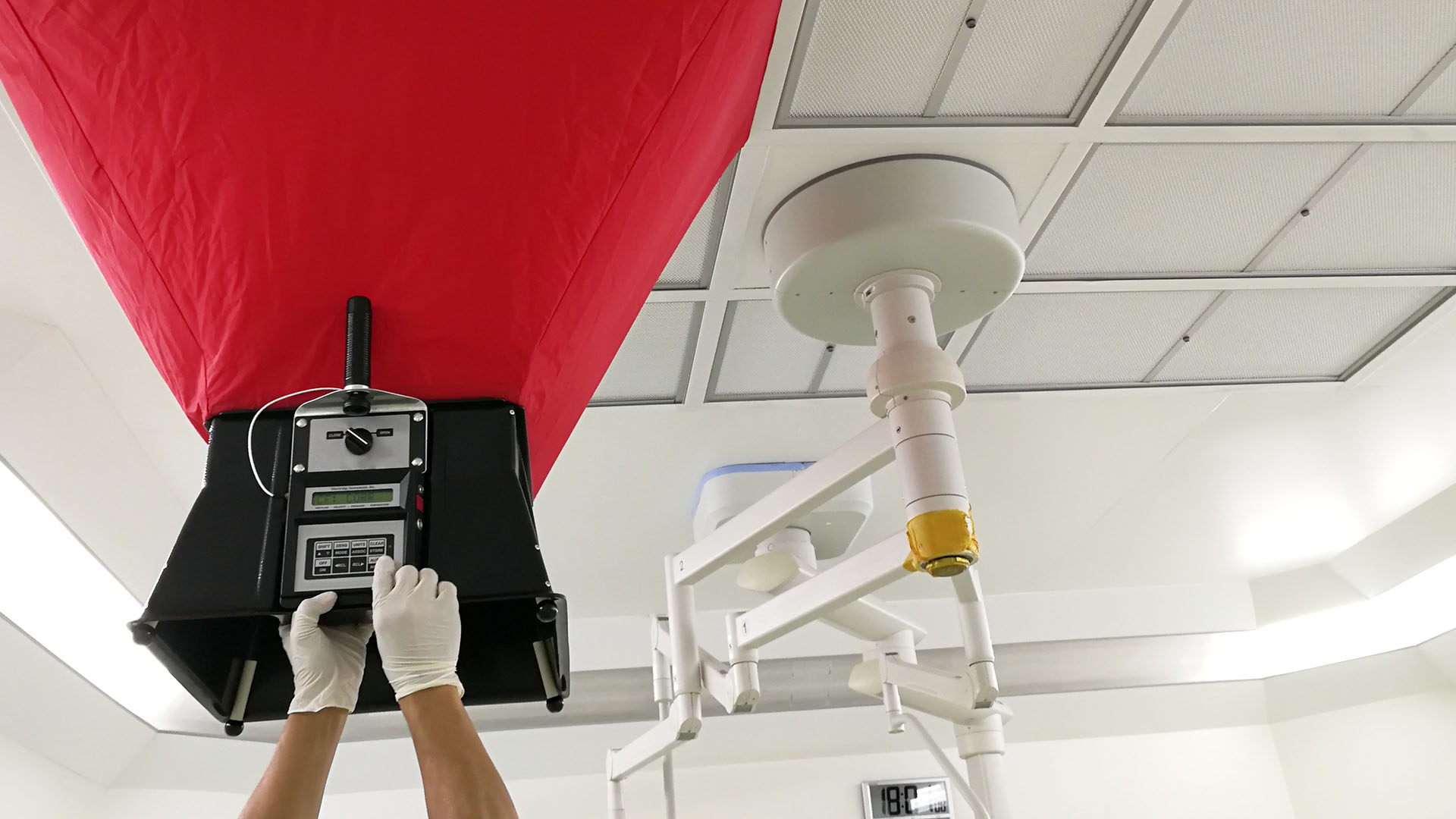
Healthcare facilities are places where workers are more likely to be exposed to airborne biological hazards (e.g. bacteria and viruses). Ensuring adequate ventilation can reduce the concentration of airborne biological hazards in an indoor space. It is important to ensure ventilation and air cleaning mechanisms are suited to the type of work and level of risk.
Natural ventilation (e.g. opening windows and doors) may not be appropriate in high-risk settings, as it may spread the biological hazard to other areas. In these situations, heating ventilation and air conditioning (HVAC) systems fitted with HEPA filters may be necessary to remove biological hazards from the air. Fans may also be used to improve airflow. However, for all ventilation types, the direction of airflow must be from ‘clean’ to less clean areas, to avoid dispersing contaminated air.
HVAC systems should be well maintained and regularly serviced in accordance with manufacturers’ instructions, to an agreed maintenance plan, and accurately documented in a maintenance record.
You should also consult a ventilation engineer or an occupational hygienist for advice on optimal ventilation when designing or refitting an area, or during an airborne-transmitted outbreak.
Additional guidance can be found in the Code of Practice: Managing the work environment and facilities and the Australasian Health Facility Guidelines.
Remote or isolated work
Remote or isolated work is work that is isolated from the assistance of other people because of the location, time or nature of the work being done. Assistance from other people includes support, rescue, medical assistance and emergency services.
Healthcare and social assistance services are often carried out in remote and isolated locations. For example, a residential care worker may work alone on a night shift, or a flying doctor service may visit a remote community.
Working alone or remotely increases the risk of any job. Exposure to work-related violence (which can come from clients, patients and members of the public or from other workers and providers) and poor access to emergency assistance are the main hazards that increase the risk of remote or isolated work. Working alone can also increase the severity of workplace injuries.
Remote and isolated work may carry other types of risk. For example, it can increase the likelihood of workers being exposed to psychosocial hazards. These hazards include:
- Lack of support (e.g. workers cannot easily ask questions, access resources or get help from supervisors or other workers)
- Work-related violence (e.g. security officers may be at greater risk of exposure to violence and aggression when working alone without back-up)
- Sexual and gender-based harassment (e.g. female workers may be at greater risk of sexual and gender-based harassment)
- Low role clarity (e.g. workers may not be able to easily discuss and clarify tasks)
- High job demands (e.g. a worker working alone cannot share or divide tasks when there are competing demands, such as when moving a patient or lifting and carrying heavy loads).
For more information see Psychosocial hazards and Code of Practice: Managing psychosocial hazards at work.
Working in private homes
Many healthcare and social assistance workers may deliver care and support in private homes (e.g. residential care facilities, and residential homes in the community). These homes are a private home for the client and a workplace for the worker. You have a duty to manage WHS risks and provide a safe working environment extends to private homes.
Working together with homeowners, clients, their families and others is important to minimising any WHS risks. Before visiting someone’s home, a risk assessment should be conducted and suitable controls to manage risks must be put in place.
In some cases, the rights of a client in their home (e.g. the right to smoke cigarettes) may conflict with the rights of workers to a safe workplace (e.g. not being exposed to harmful carcinogens). You must eliminate or minimise WHS risks in private homes as much as you reasonably can. To do this, you must consult with homeowners or clients and do all you reasonably can to protect workers from WHS risks.
Workers also have the right to stop or refuse work they reasonably believe is unsafe.
Smoking
Smoke from cigarettes, vapes and similar products can cause cancer. Workers should never be exposed to this smoke. Where a workplace is also a person’s home, smoking should not occur near or around workers.
When WHS hazards and risks are identified in a private home, you must share this information with workers, and with other employers or contractors who may deliver services at the home (e.g. presence of a dangerous pet). Ensure a pre-visit risk assessment is conducted for home visits. Where the risks of a home visit are high, care or support may need to be provided in another location, such as a facility where risks to WHS are lower.
Table 4 below includes example control measures you can use to control WHS risks in private homes.
Table 4: Example control measures for private homes
| Duty | Examples of control measures |
|---|---|
| Ensuring safe access and movement |
|
| Ensuring the home is safe to work in |
|
| Ensuring utilities are in good working order |
|
How you should identify and assess hazards and risks
Consult with workers and others to identify and assess hazards and risks
How you should control risks
Consult with workers and others to design controls
Eliminate the risks of the hazard as much as you reasonably can, including through good work design.
Use the hierarchy of controls. Example controls for work environment hazards include:
- Eliminating the need to enter a hazardous private home by delivering a healthcare consultation remotely via video call, instead of going in person or having the person attend a clinic or hospital.
- Substituting hazardous cleaning products available in a client’s home with non-toxic alternatives.
- Isolating the risk posed by a dangerous dog by ensuring it is always locked away in the garage whenever workers visit the home.
- Engineering controls, such as patient lifting devices, to reduce manual handling risks.
- Administrative controls. For example:
- Send more than one worker to the home, especially where there is a risk of violence or aggression.
- Ensure workers have access to communication, such as a suitable duress alarm.
- Provide a system that allows you to know the whereabouts of your workers (e.g. workers notify you when they arrive at and leave a private home).
- Providing training to your workers on effective de-escalation techniques in case they experience violence or aggression.
- Provide PPE (e.g. gloves and masks for cleaning)
- Use a combination of control measures to effectively eliminate or minimise risks.
Maintain and review controls to ensure they are being used and are effective, especially after any changes to the task or workplace.
Case study – Smoking at an aged care home
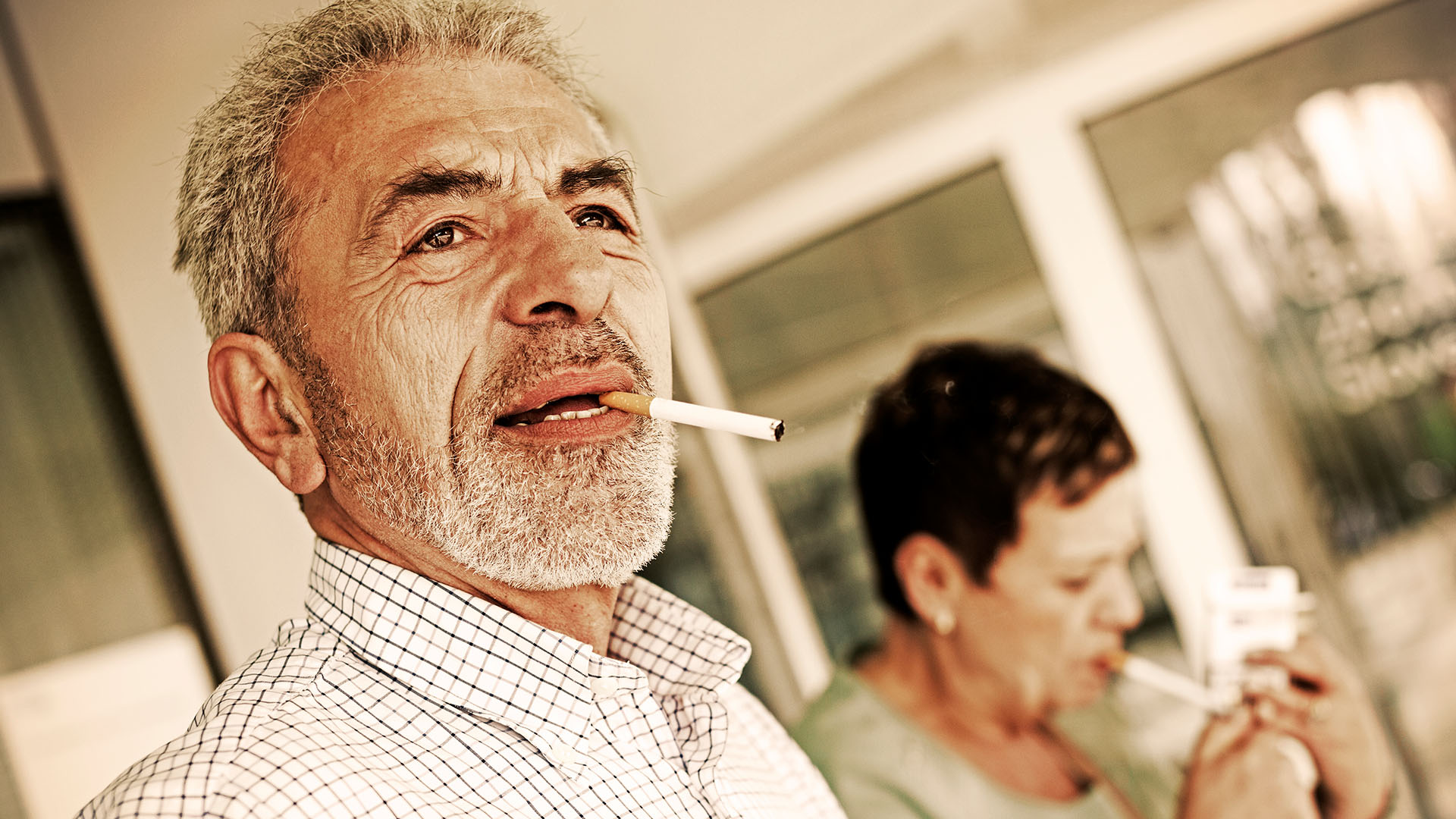
A residential aged care home allows residents to smoke cigarettes outside in a designated smoking area, on the basis that the facility is their home. However, health and safety representatives for workers at the facility are concerned that workers are being exposed to the risk of lung cancer through second-hand smoke, as workers are often asked to supervise residents while they smoke.
The facility considers the issue through a risk assessment and determines that the risk to workers outweighs the need for residents to smoke. The facility develops a plan to be smoke-free with a phasing out of all smoking in the facility. The facility also provides residents with access to a ‘quit smoking’ program. Many residents oppose the initiative and some even move to another facility. However, the majority eventually come to understand their need to cooperate in providing a safe work environment, and the benefits for their own health.