Key messages
Slips, trips and falls are one of the largest causes of injuries in the healthcare and social assistance industry. Many slips, trips and falls involve falling on the same level, and falls on stairs and ramps. Slips, trips and falls indoors and outdoors and often result in serious injuries including fractures, musculoskeletal injuries, cuts and bruises.
Workers are sometimes blamed for slips, trips and falls (e.g. “You should have been more careful!”) when the cause is usually due to the way work is organised or an unsafe work environment. You can reduce the risk of slips, trips and falls through good work design (e.g. designing the work environment to be free from trip hazards), good maintenance of the work environment (e.g. keeping walkways clear), and systems of work that reduce risks (e.g. not creating high work demands that make workers feel they have to rush or take shortcuts).
Jump to:
How you should identify and assess hazards and risks How you should control risks Case study: Alternative route
Slips
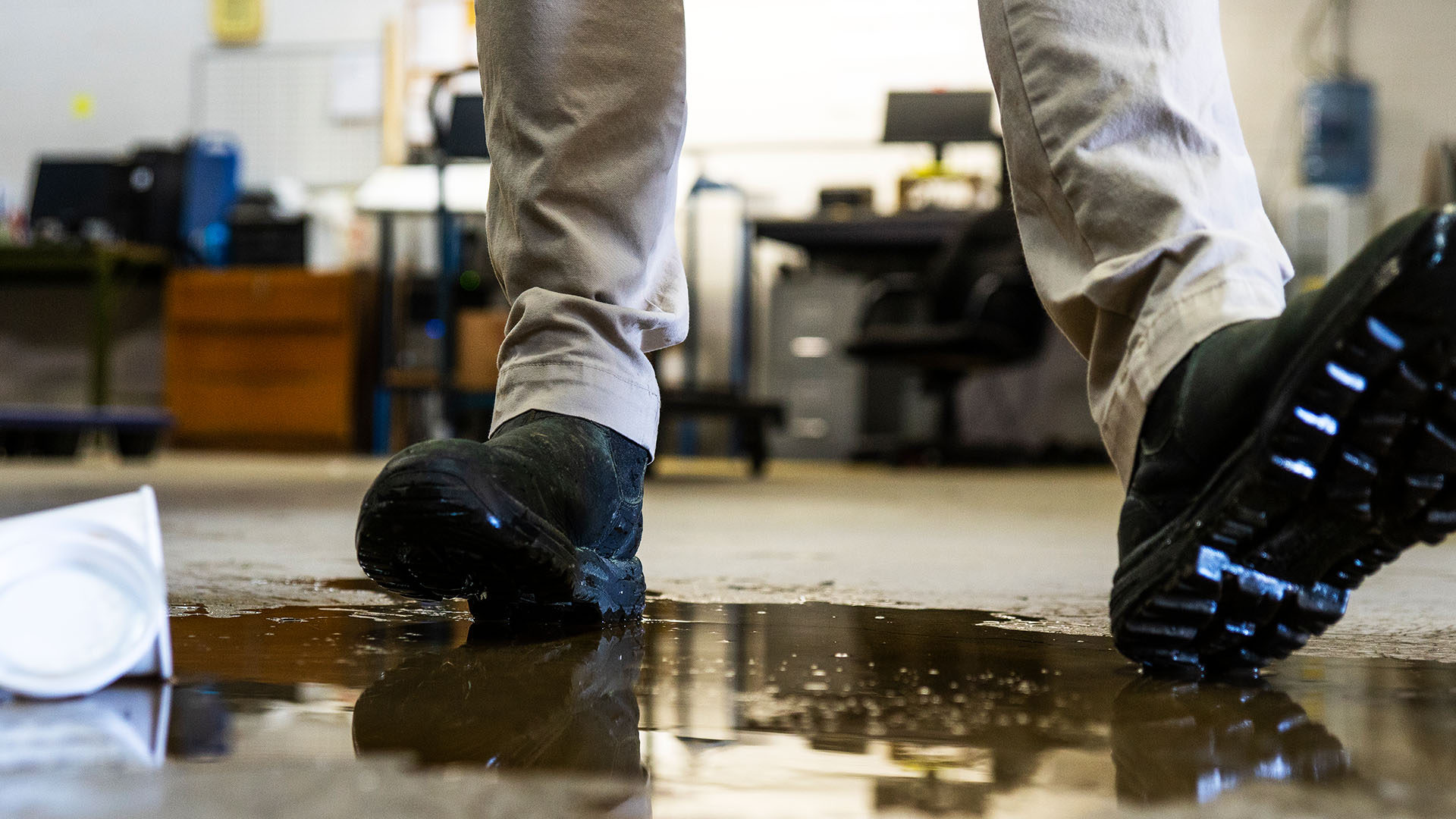
Slips occur when there is not enough traction (i.e. there is insufficient contact, grip or friction between a person’s foot or shoe and a walking surface), leading to a loss of balance.
Contaminants on surfaces that lead to slips include both wet (e.g. water, oil) or dry (e.g. talcum powder) substances. For example, grease on the floor of an aged care home’s kitchen could cause a worker’s shoe to slide and them to slip over. Slips may also cause a secondary injury (e.g. the worker who slips then hits their head on a bench).
Trips
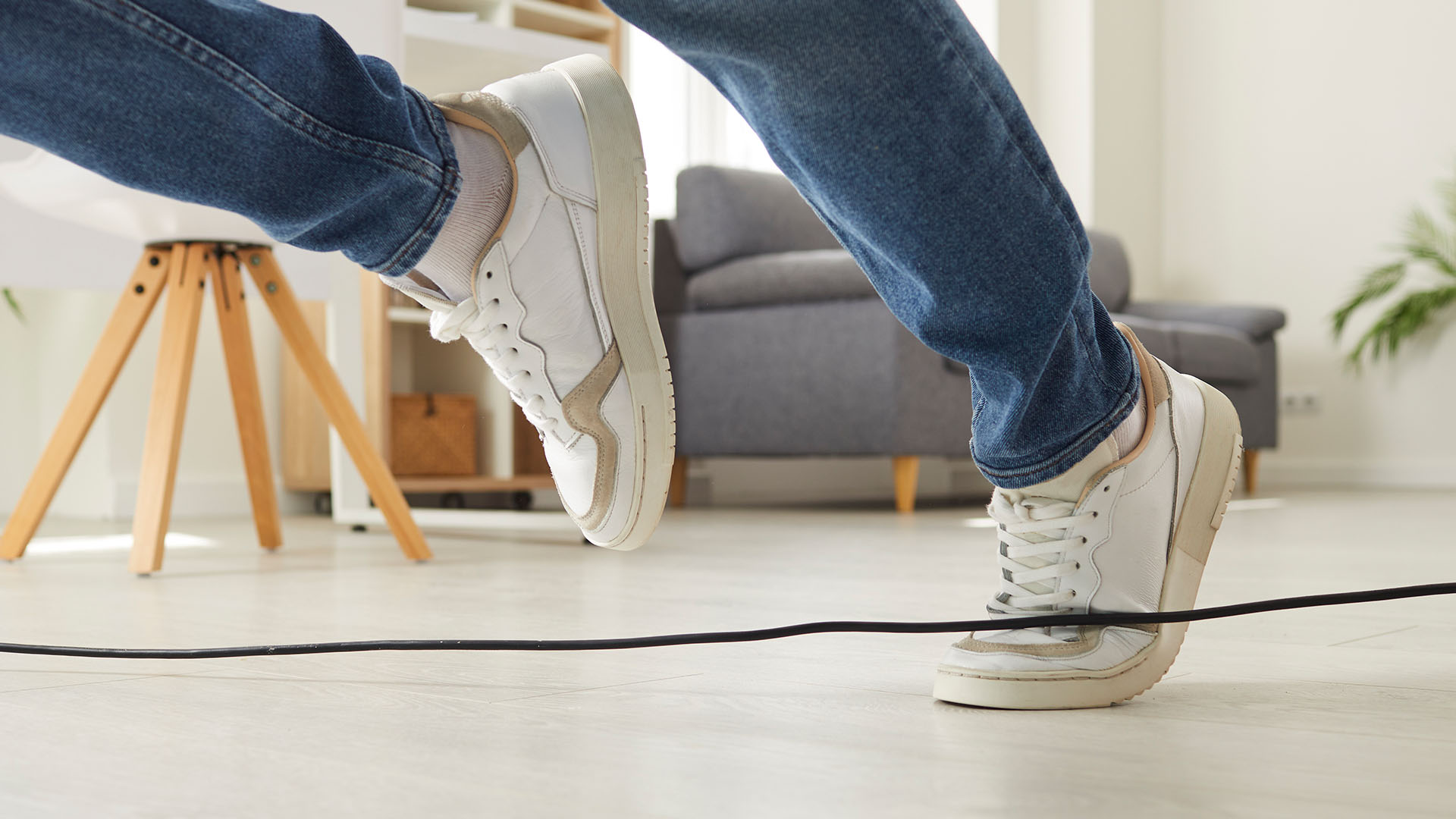
Trips occur when a person’s foot or lower leg gets caught on an object while walking and throws them off balance.
Tripping is often due to an obstacle or item the worker has not noticed (e.g. electrical cords from medical equipment, loose mats or carpet tiles, or changes in floor surface levels). For example, a disability support worker visiting a new client’s home may trip on a loose mat in a dark part of the house, causing them to lose balance and fall.
Falls
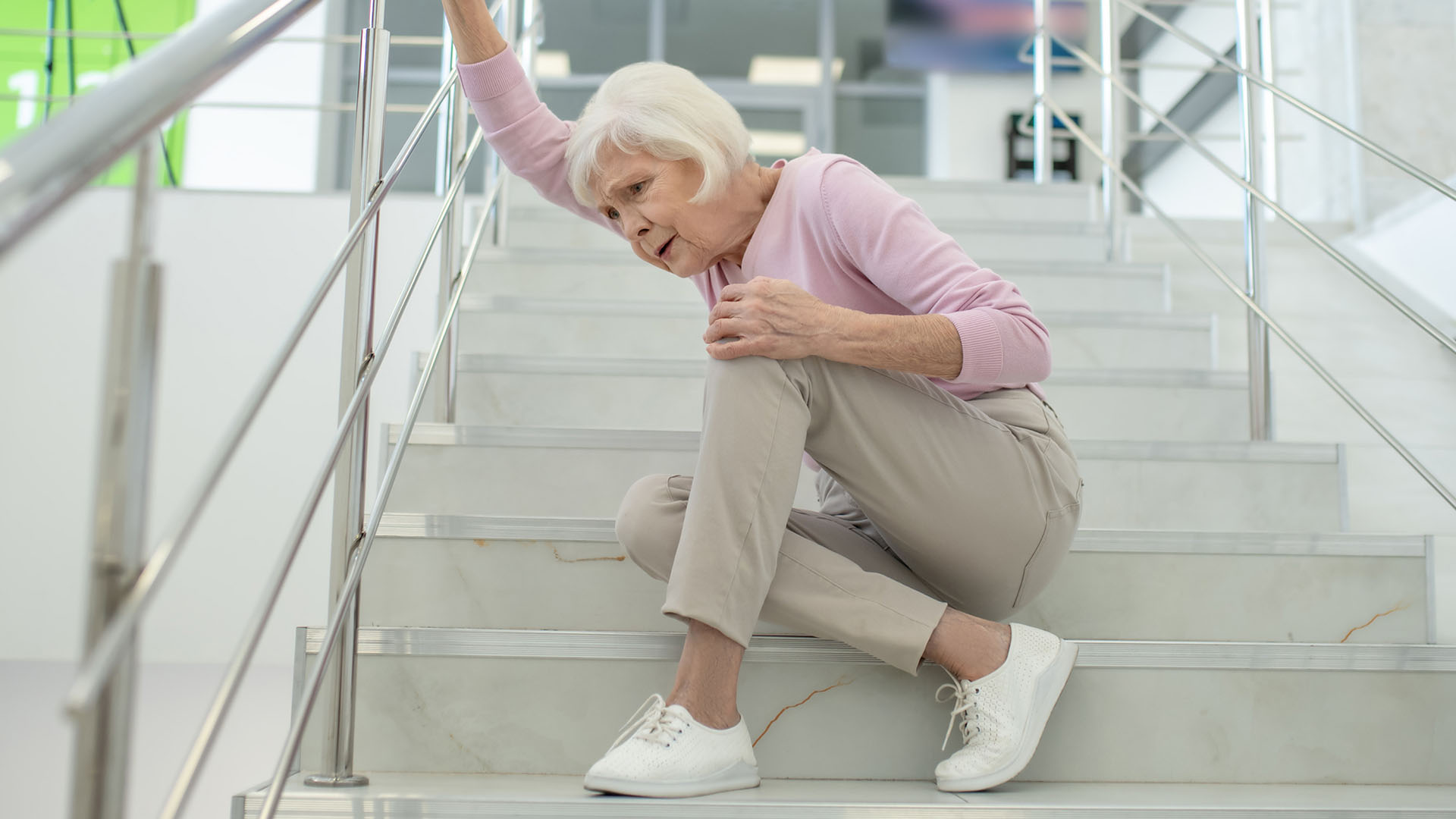
Falls at level often occur when a person unexpectedly falls from a higher surface to a lower surface, such as when a person loses balance or misses a step.
Due to the speed and sudden forces involved, injuries can still occur even if no fall results. For example, while carrying an empty stretcher down a flight of stairs, a paramedic mis-stepped causing her to lose balance. She did not fall but strained her back muscles while trying to regain balance.
Common slips, trips and falls hazards in the healthcare and social assistance industry include:
- work demands that cause workers to rush or take shortcuts
- poorly designed tasks, such as requiring workers to carry objects that restrict their vision
- uneven steps, stairs or paths
- uneven or damaged floor surfaces (e.g. ridges between carpet and tiles, damaged carpets, loose mats and carpet tiles, rotted floorboards)
- wet or oily floors (e.g. bathrooms, recently washed floors or spills)
- obstructions or obstacles (e.g. rugs, towels on the bathroom floor, pets, excess furniture, electrical cords)
- inappropriate footwear
- carrying loads which obstruct a worker’s view
- poor lighting, and
- leaf litter, seed pods or slippery vegetation (e.g. moss on pathways or steps).
You must do as much as you reasonably can to prevent slips, trips and falls.
You must eliminate risks as much as you reasonably can. If this is not possible, you must minimise risks as much as you reasonably can.
For more information, see:
Quick links
Floors and surfaces Lighting Housekeeping
Floors and surfaces
A wide range of floor covering materials are used in healthcare and social assistance workplaces.
When selecting floor coverings for the workplace, the following needs to be given consideration:
- How much foot traffic will the surface have?
- Does the flooring provide adequate grip or friction for safe walking when dry?
- For flooring that is walked on when wet, does it have enough grip to be safe when wet?
- What kind of work will happen? (e.g. carpet provides good slip resistance but may cause too much friction if workers need to push heavy patient beds or food trolleys.)
- How often, and in what way, will the surface be cleaned?
Floors should be inspected regularly and maintained to eliminate or minimise slip, trip and fall hazards. Floor surfaces should have enough grip to prevent slipping, especially in areas that are likely to become wet or contaminated. Surface treatments may also be used to improve slip resistance if required. Floors at different levels should be differentiated with contrasting colours.
The slip resistance of floors should be maintained by using the correct cleaning methods. Some cleaning methods may increase the risk of slips (e.g. through build-up that can reduce grip).
Carpeting should be avoided in clinical areas where patient care occurs, or in areas where:
- the carpet may make it difficult for workers to push patient beds
- wheelchairs or other wheeled equipment like food and medication trolleys are used, or
- unsecured carpets or floor mats should generally not be used unless they can be fixed in place, as they pose a trip hazard.
Floors and surfaces should also be routinely cleaned for infection control. For more information on infection control, see biological hazards.
Lighting
Lighting must be provided, whether it is from a natural or artificial source, to allow safe movement around the workplace and to allow workers to perform their job without having to adopt awkward postures or strain their eyes to see.
Entry and exit routes, stairs and walkways, wards, operating theatres, waiting areas and all areas of the workplace (including private homes) should be well lit.
Adequate lighting after dark may be required for outdoor paths around the workplace and in carparks. Outdoor lighting should allow workers to move about easily without the risk of falling.
Emergency lighting must be provided for the safe evacuation of people in the event of an emergency.
For more information on lighting in the workplace, see Code of Practice: Managing the work environment and facilities.
Housekeeping
An untidy workplace can create slip, trip and fall risks. Therefore, good housekeeping practices are essential for all workplaces.
You should put systems in place to ensure:
- the source of any leaks is found and fixed before slips occur
- spills on floors are cleaned up as soon as possible
- walkways are kept clear of obstructions
- work materials and equipment are stored away safely
- waste is disposed of and removed from the workplace promptly, and
- workers are trained in housekeeping procedures and cooperate to maintain a clean and tidy workplace.
While it may be reasonable to expect workers to keep their immediate work area clean and tidy at the end of the working day, other options for carrying out general cleaning of the workplace should be considered, including having the workplace professionally cleaned.
Additional guidance on managing risks associated with slips, trips and falls is available in the Slips and trips at the workplace fact sheet.
How you should identify and assess hazards and risks
Consult with workers and others to identify and assess hazards and risks
How you should control risks
Consult with workers and others to design controls
Eliminate or minimise the risks of the hazard as much as you reasonably can, including through good work design.
Example controls using the hierarchy of controls for slips, trips and falls include:
- Eliminate the risks of slips, trips and falls (e.g. fix a broken paver)
- Substitute the hazard with a safer alternative (e.g. replace old, worn flooring with a newer, slip-resistant surface)
- Isolate the hazard from a person exposed to it (e.g. prevent access to a staircase with a broken step and provide an alternative route until it is fixed).
- Engineering controls (e.g. install rails and non-slip surfaces to bathrooms, improve lighting, provide adequate drainage, use equipment to avoid having to reach high places)
- Administrative controls (e.g. implement housekeeping procedures, regularly inspect the workplace for trip hazards)
- Provide PPE (e.g. slip-resistant footwear).
Use a combination of control measures to effectively eliminate or minimise risks.
Maintain and review controls to ensure they are being used and are effective, especially after any changes to the task or workplace.
Case study – Alternative route
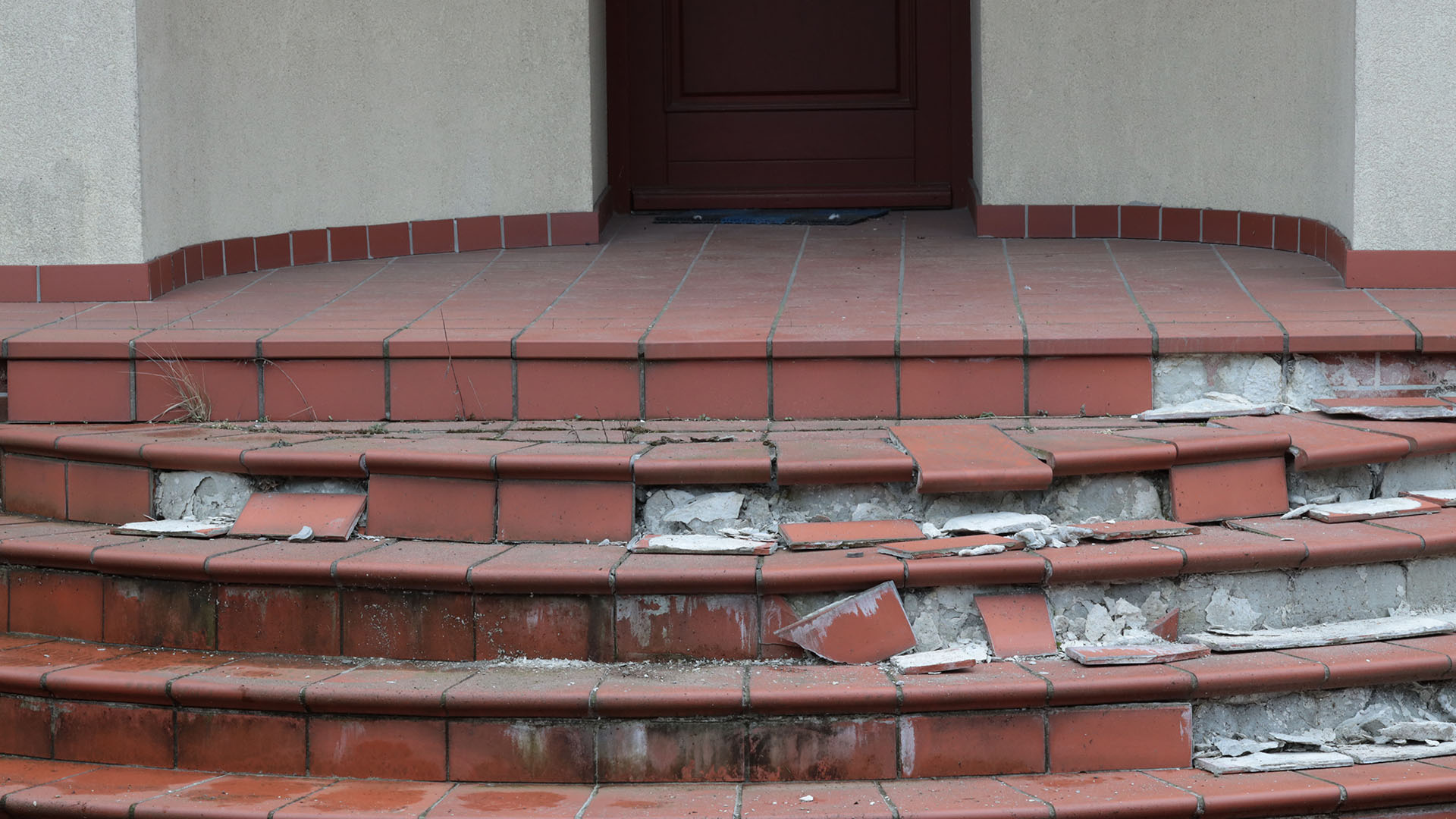
A disability support provider was contacted by a client asking for in-home care services. An initial house inspection identified that the front stairs were damaged and posed a significant tripping risk. As repairs would be costly, the provider and client agreed that workers would enter the house through the back door, which was well-lit and had stable concrete flooring. The provider informed workers of this approach, and the client was able to receive their in-home care while mitigating the trip hazard for the workers.