
Biological hazards include viruses, bacteria, parasites, prions and some types of fungi (including mould). They also include allergens, irritants and toxins, such as organic dusts, sap and venom.
Biological hazards can be:
- communicable, meaning they can spread to a person from another person or animal, or
- non-communicable, meaning they only affect the person who was exposed and that person cannot spread the biological hazard further.
Biological hazards which are communicable have the potential to rapidly spread with far-reaching impacts within workplaces and the broader community.
People may be exposed at work if biological hazards are:
- part of the work conducted, for example:
- research laboratories working directly with viruses
- healthcare workers in contact with ill patients
- farmers handling sick animals, and
- waste management workers processing untreated waste
- associated with where the work occurs, for example:
- working outside where there is a high prevalence of mosquitoes
- work which involves travelling to areas where a disease is known to exist, such as areas with tropical diseases, and
- working in indoor spaces with contaminated air or mould growth
- brought into the workplace from the community, for example:
- workers and other people who enter the workplace whilst unwell with a communicable disease, such as the common cold, influenza or COVID-19.
The source of a biological hazard is the material or environment in which it is found. Common sources in the workplace are depicted in the infographic and explained below. There may be more than one source present in the workplace.
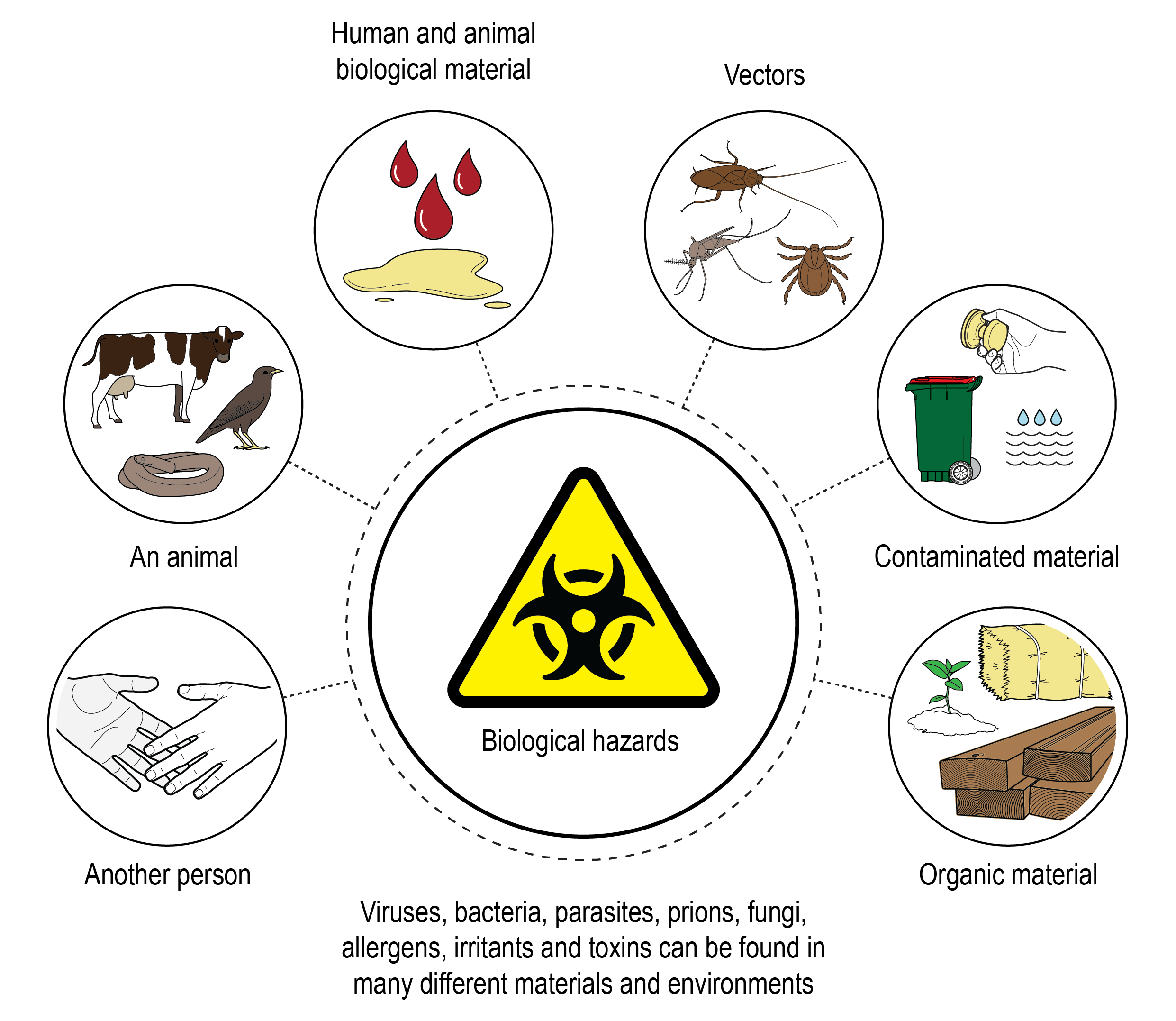
Infographic: Sources of biological hazards
Another person
Workers may be exposed to a biological hazard (e.g. viruses and bacteria) from other people. Where a worker is infected with a biological hazard which can spread to other people, then they are also a potential source. Common examples in the workplace include workers, customers, clients and patients.
Animals
Workers may be exposed to biological hazards (e.g. fungi, venom and allergens) from contact with animals. Common examples in the workplace include cattle, sheep, pigs, birds, bats, dogs, cats, pests, horses, spiders, reptiles and marine animals.
Human or animal biological material
Workers may be exposed to biological hazards (e.g. viruses, bacteria and parasites) from contact with human or animal biological materials. Common examples in the workplace include blood, faeces, manure, urine, saliva, mucus, semen, carcasses and birth products.
Vectors
Some vectors can spread biological hazards (e.g. viruses, bacteria and parasites) between humans, or from animals to humans. Common examples in the workplace include mosquitoes, ticks, fleas, mites and cockroaches.
Contaminated material
Workers may be exposed to biological hazards (e.g. bacteria, mould and parasites) when working directly with contaminated materials (e.g. compost, mulch or sewerage) or in different environments containing contaminated materials (e.g. working in a water damaged building with mould growth). Common examples in the workplace include surfaces, objects, soil, dust, water, air, food and waste.
Organic material
Workers may be exposed to biological hazards (e.g. allergens and irritants) when working with organic dusts which contain materials that originate from plants or animals. These organic dusts may become airborne when disturbed. Certain plant materials may also become hazardous when they enter the body or come into direct contact with the skin and trigger an immune response (e.g. allergies, irritation or inflammation). Common examples in the workplace include cotton, grain, wood, flour and hay dust, and plant cultures, sap and debris.
To cause harm, a worker must be exposed to a biological hazard. The ways workers can be exposed to biological hazards are depicted in the infographic and explained below. Workers can be exposed to the same biological hazard in more than one way.

Infographic: Sources of biological hazards
Person to person contact
Workers can be exposed to biological hazards through intentional or unintentional physical contact with a person infected with a communicable disease or via sexual transmission.
Animal to person contact
Workers can be exposed to biological hazards through physical contact with animals infected with a disease which can spread to humans.
Plant to person contact
Workers can be exposed to biological hazards through physical contact with plant material which is known to trigger an immune response in people.
Contact with human and animal biological material
Workers can be exposed to biological hazards through contact with human and animal biological material, such as faeces, urine, saliva and mucus.
Penetrating injury
Workers can be exposed to biological hazards through injuries caused by interactions with people, animals, the environment and objects, such as scratches, bites, stings, cuts, abrasions or sharps injuries.
Transmission through the air
Workers can be exposed to biological hazards through contact with:
- contaminated dust, water or air (e.g. airborne mould spores)
- organic dust (e.g. generated through woodworking and food processing)
- respiratory particles (e.g. generated through coughing and sneezing)
- splashes and sprays of body substances (e.g. generated through vomitus and spitting)
Vector transmission
Workers can be exposed to biological hazards through contact with vectors (e.g. mosquitoes, ticks, fleas and mites).
Contact with contaminated material
Workers can be exposed to biological hazards through physical contact with surfaces (e.g. desks and door handles), objects (e.g. devices and tools), soil, waste, water (e.g. floodwater and dirty drinking water) and food.
How biological hazards enter the body
Biological hazards can enter the body in different ways, as depicted in the below infographic. This includes through:
- inhalation
- ingestion
- contact with the eyes, nose, ears, mouth or skin, and
- broken or damaged skin, such as from a penetrating injury or dermatitis.
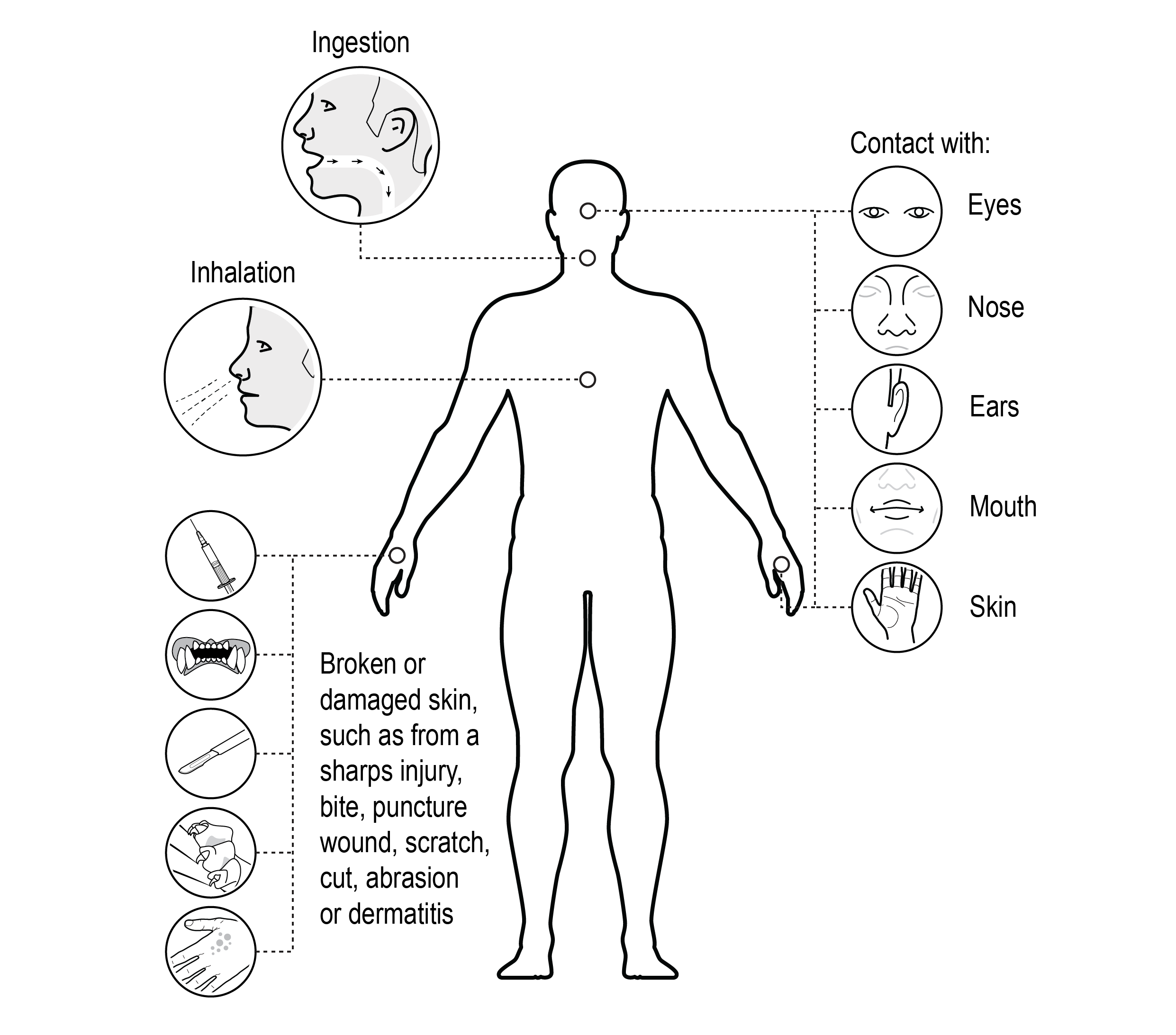
Infographic: Sources of biological hazards
Exposure of a worker or other person at the workplace to biological hazards can result in injury, illness and disease. This includes:
- infectious diseases (e.g. Q fever and bloodborne viruses)
- respiratory conditions (e.g. occupational asthma and hypersensitivity pneumonitis from mould spores or organic dusts)
- neurological and cognitive harm (e.g. from Hendra virus and Japanese encephalitis)
- allergic reactions or irritation (e.g. from animal dander or plant materials), and
- skin infections (e.g. scabies and tinea).
The harm can be immediate or occur gradually after repetitive, long duration exposure.
Depending on what the biological hazards are, and the person’s susceptibility to illness, the consequences of exposure can range from mild to severe, and in some cases can result in death.
Vulnerable people may be at greater risk of severe illness after exposure to a biological hazard, such as those with pre-existing medical conditions, those who are immunocompromised, infants and the elderly.
Biological hazards, or the control measures implemented to manage them, can also contribute to psychosocial hazards. A psychosocial hazard is anything that could cause psychological harm (e.g. harm someone’s mental health). For example, working in a hazardous environment contaminated with biological material (e.g. blood, vomit, faeces or urine) may can cause a worker to experience anxiety of contracting an illness. Further information on psychosocial hazards in the workplace can be found on our Psychosocial hazards webpage.